For anyone buying fine wine with capital growth in mind, professional in-bond storage is integral. It maintains the wine’s provenance and gives a future buyer confidence that the wine has been kept in ideal conditions for maturation. You will often see wines offered ‘In Bond’, but what does that term actually mean, and what happens after you buy?
What does ‘In Bond’ mean?
Wine held in bond is stored in an HMRC approved excise warehouse under duty suspension arrangements. In simple terms, UK Alcohol Duty and any applicable VAT have not yet been paid. The wine is not ‘Tax Free’, those charges are simply deferred while it remains within the bonded warehousing system.
This distinction matters because an in-bond price is quoted before duty and VAT. It allows for these investors to buy and hold wine without paying these charges immediately. If the wine is later sold while it remains in bond, it can be transferred to the new owner within an approved bonded warehouse, again without triggering UK duty and VAT at that point. This makes in-bond storage particularly well suited to wines intended for capital growth, future resale or even export – a must for many international buyers.
If wine is delivered for consumption, it must first be taken out of bond. VAT is not based on the wine’s current market value. Instead, VAT is calculated using the price from the most recent sale while the wine was in bond. If the wine has not been sold since it was originally purchased, VAT is based on the original purchase price. If it has been sold while in bond, VAT is based on the price paid by the most recent buyer

VAT and duty are deferred until the wine is taken out of bond. At that point, VAT is charged at the current VAT rate, with any Alcohol Duty included in the amount on which VAT is calculated.
Alcohol Duty is unrelated to the wine’s value. The quantity of wine is multiplied by its alcohol volume (ABV) to establish the litres of pure alcohol, which are charged at the applicable flat rate per litre when the wine leaves bond. Direct exports can leave the UK without UK Alcohol Duty and VAT becoming payable, provided the relevant export requirements are met.
What happens to your wine?
When wine purchased through Cult & Boutique is stored ‘in bond’, it is placed with our chosen bonded storage provider, London City Bond (LCB). With a history that can be traced back to 1870, LCB has extensive experience in the secure, long-term storage of fine wine.
The wine is entered into LCB’s controlled system and stored in a private reserve under the buyer’s full name and customer reference. Each case is assigned a unique rotation number linking it to its legal owner and enabling its identity, location and movement history to be traced. If a case is moved, split, sold or reconfigured, new rotation numbers are created for the remaining wine, ensuring that every case remains clearly identified and fully traceable.
This audit trail is central to provenance, one of the foundations of wine investment. A clear, unbroken history showing that a case has remained in professional bonded storage gives future buyers confidence about where and how it has been kept. It can therefore support marketability when the time comes to sell. Bonded storage also reduces unnecessary movement and exposure to unsuitable temperatures, light or vibration, all of which helps to preserve the wine’s condition and potential value.
Why we use LCB’s Eton Park facility
We choose to store our customer’s wines at LCB’s Eton Park facility in Burton-upon-Trent, previously known as Vinotheque. LCB is the UK’s leading bonded warehousing provider, and Eton Park is their specialist site solely for the storage of fine wine and spirits.
The facility is designed to protect wine during maturation. LCB describes Eton Park as free from vibration, ultraviolet light and daylight, with bespoke temperature and humidity controls and comprehensive, round the clock security. Wines purchased through Cult & Boutique are also fully insured while stored with LCB from breakage and theft. Our clients also benefit from additional coverage through Fidentia, insuring their wines through transit within the EEA as well as against certain natural disasters.
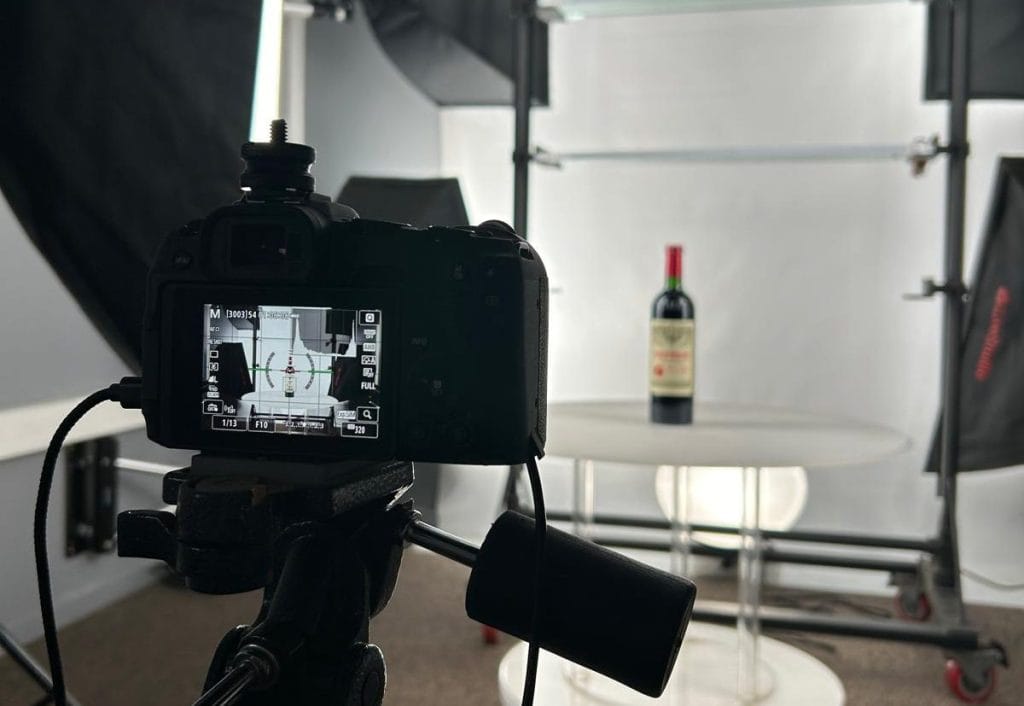
Detailed condition reports are available for all wine held at the facility. Each report assesses the condition of the foil caps, corks and fill levels, together with the general condition of the bottles and packaging. High-resolution images of the bottles and packaging are also included, clearly showing the rotation number for each case, along with the full name and client reference of the owner. A new 360-degree photography service is now also available, providing highly detailed digital condition reports and an enhanced visual record of the wine and its packaging.
Facilities matter, but so do the teams behind them. We have stored wine at Eton Park for more than a decade, and our relationship with LCB is second to none. Over that time, we have come to value their careful handling, dependable administration and consistently professional service. That long-standing working relationship helps us manage stock arrivals, transfers and deliveries efficiently, while giving our customers confidence that their wine is in expert hands.
For an investor, in-bond storage combines tax deferral, professional care and a strong record of provenance. If you intend to hold your wine through maturation, resell or export it, it is essential to protect your investment’s condition and marketability.